Cosmetic
The honest guide to whitening
What whitening can and cannot do, what it costs, how it feels and how long it lasts, without the sales pitch.
By Dr. Lena Moretti, Principal Dentist
6 min read
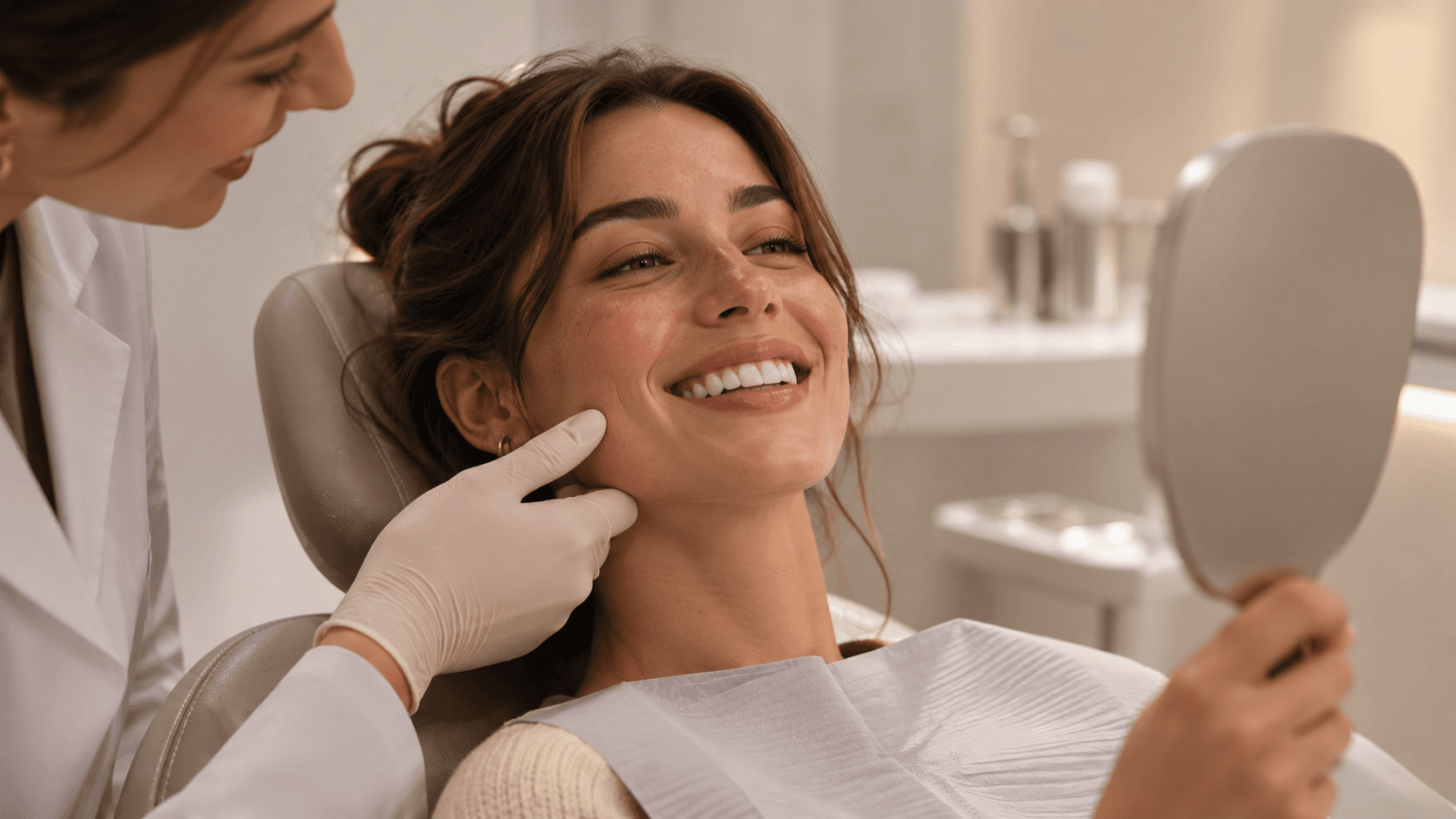
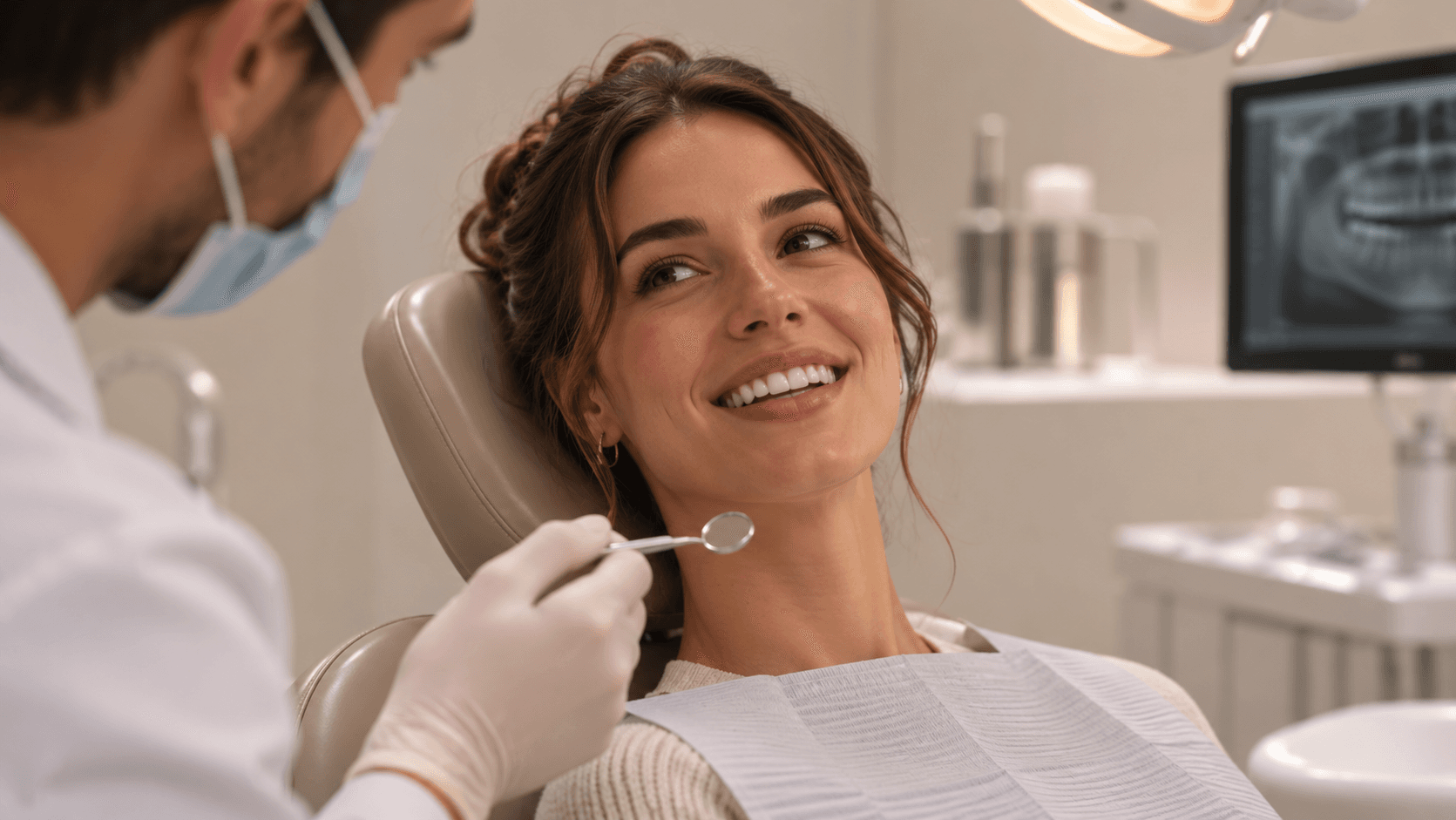
Whitening is the treatment we are asked about most, and the one surrounded by the most noise. This guide is what we tell patients in the chair: what it can and cannot do, what it costs, how it feels and how long it lasts. No sales pitch, and no miracles.
What whitening actually does
Your teeth are not one colour. The outer enamel is slightly translucent, and the dentin beneath it is naturally more yellow. Over the years, tea, coffee, red wine, tobacco and ordinary ageing leave stains within the enamel, and the enamel itself becomes thinner, letting more of the dentin show through.
Whitening gels contain hydrogen peroxide, or carbamide peroxide, which breaks down into it. The peroxide travels into the enamel and breaks apart the molecules that cause staining, so they reflect less colour. Nothing is painted on and nothing is removed. Done properly, the structure of the tooth is unchanged.
Whitening does not add a coating. It quietly lifts the colour that has built up inside the tooth.
In the chair, or at home
There are two ways to do it, and we usually recommend the slower one.
At home with custom trays. We take a quick digital scan and make thin, close-fitting trays. You wear them with a low-strength gel for an hour a day or overnight, for about two weeks. Because the trays fit precisely, the gel stays on the teeth and away from the gums. It is gradual, comfortable and predictable, and you keep the trays for future top-ups.
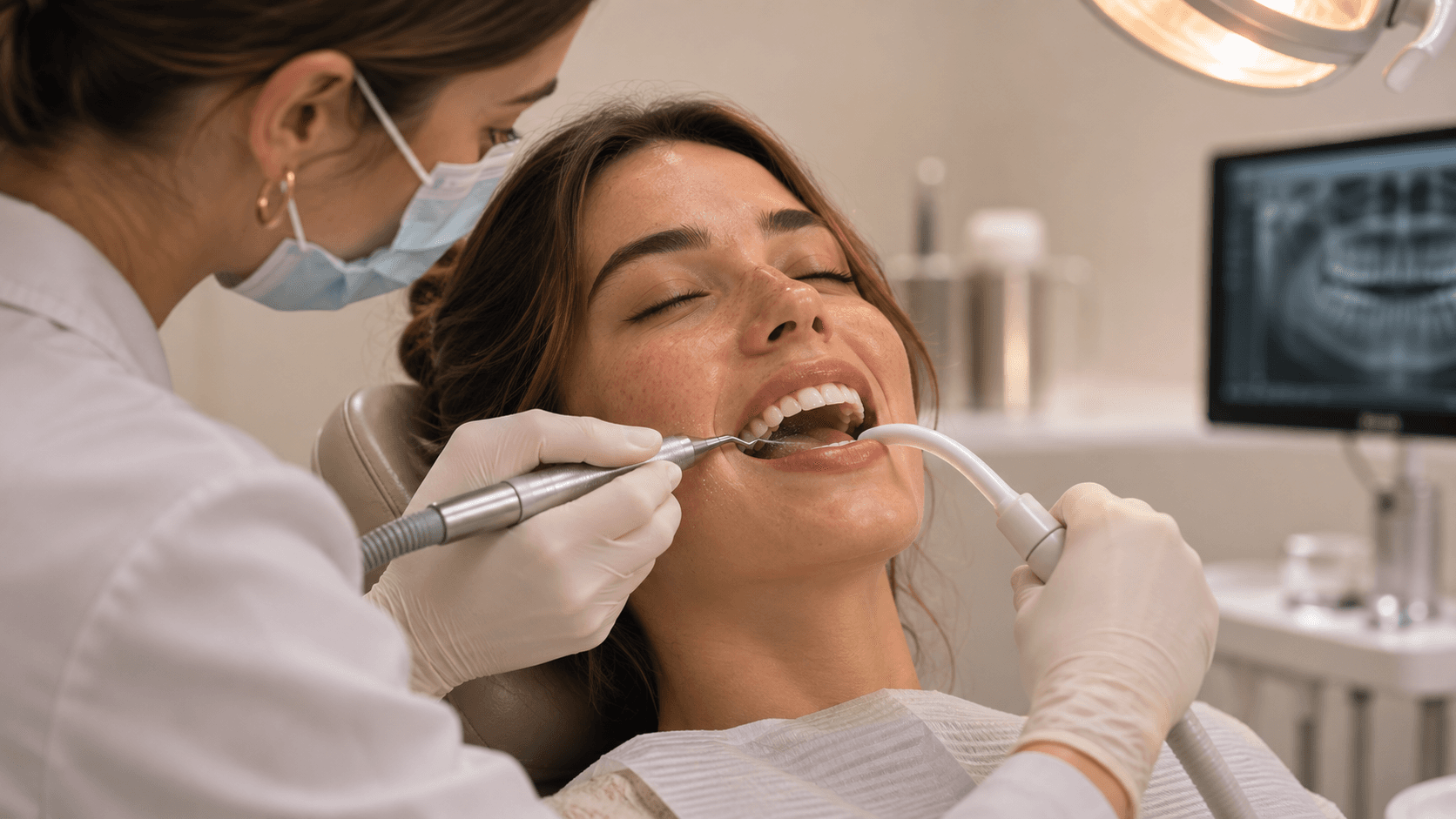
In the chair. A stronger gel is applied in the clinic over around an hour, with the gums protected. It gives a quicker first change, which some people like before an event, but on its own the result tends to fade faster and sensitivity is more common. We mostly use it as a head start, followed by trays at home.
Will it hurt?
Whitening does not hurt in the way a filling might, but sensitivity is common. Around half of our patients notice short, sharp twinges to cold during the first week. They are harmless and temporary. If they bother you, skip a day or two, use the desensitising gel we provide, and carry on. Nobody needs to whiten through discomfort.
The gums can occasionally feel irritated if gel spills over the edge of the tray. Using a little less gel usually solves it.
What it will not change
This is the part most adverts leave out. Whitening only works on natural enamel. Crowns, veneers, bonding and white fillings stay exactly the shade they were made. If you have any at the front of your mouth, we plan for that before starting, sometimes by whitening first and replacing an old filling afterwards so that everything matches.
Some stains respond poorly. Grey or banded discolouration caused by certain antibiotics in childhood, or a single tooth that has darkened after an injury, needs a different approach. We will tell you at the assessment rather than let you find out after three weeks.
A good result looks like your own teeth on a good day. If people ask whether you have had your teeth done, it is probably too much.
How long it lasts
Results usually last between one and three years, depending on what you eat and drink and whether you smoke. Many patients wear their trays for a night or two every few months to keep the shade steady. A small syringe of top-up gel costs far less than starting again.
During the whitening weeks themselves, the enamel picks up stain more easily, so it helps to keep coffee, tea and red wine to a minimum, or to drink them through a straw.
Who should not whiten
- Anyone under 18. In Ireland, whitening is only allowed for adults, and only by a registered dental professional.
- Anyone pregnant or breastfeeding, as a precaution.
- Anyone with untreated decay, gum disease or very worn enamel. We treat those first.
Is it worth it?
For most people with healthy, naturally yellowing teeth, yes. It is the most conservative cosmetic treatment there is: no drilling, no injections and nothing that cannot be stopped. Home whitening with us costs between €390 and €590, including the assessment, the trays, the gel and a review.
If you are curious, start with an assessment. We will look at your teeth, record your starting shade and tell you honestly what to expect, including when it is not worth doing.